A creative brief on a luxury commercial does not include “and on day three the gimbal will start failing.” It does not include “the focus motors will not be able to actuate the lens at altitude in freezing temperatures.” Those are problems that exist in the equipment whether the brief mentions them or not. The job of camera prep is to find those problems before the production day starts, not after.
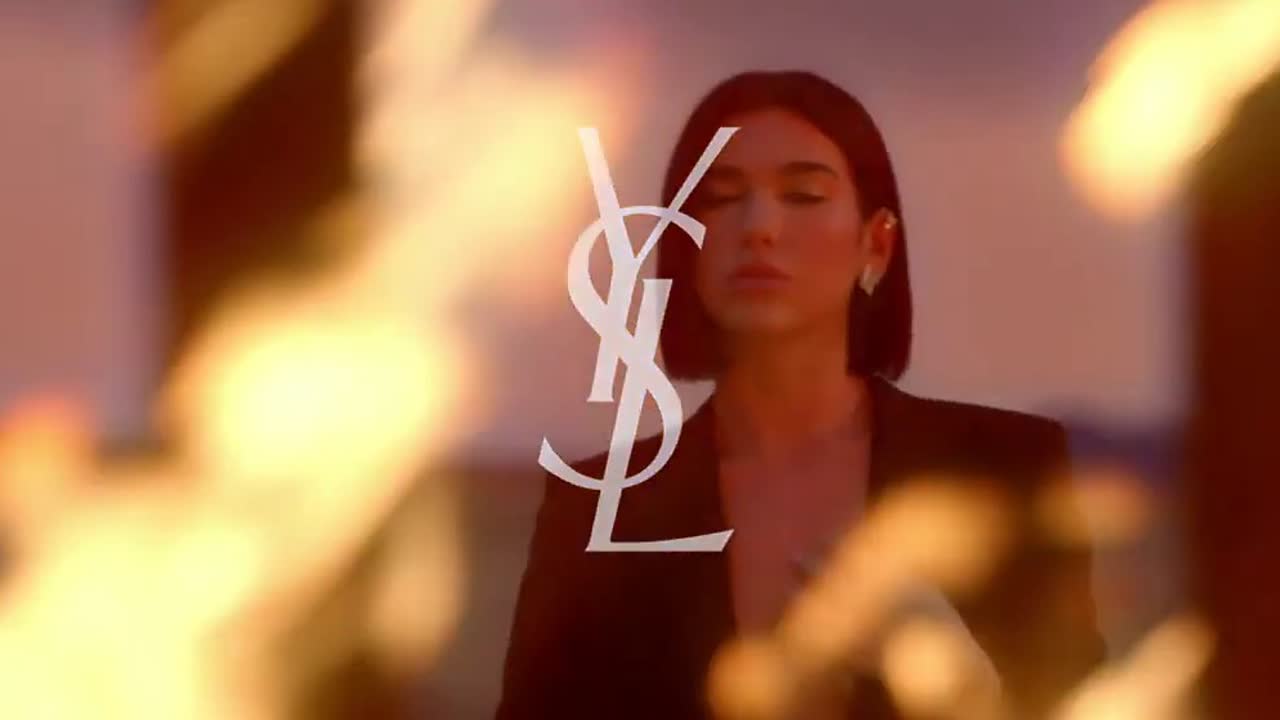
On the YSL Libre Dua Lipa campaign, camera prep is the reason the shoot did not stop.
What camera prep actually is
Camera prep is the day or days before a shoot when the camera package is built, tested end to end, and signed off as production-ready. For aerial work, that means more than verifying the camera body powers on. The aircraft, the gimbal, the camera, the lens, the focus motors, the wireless control system, the live HD feed, and every cable and battery in the kit all have to function as a single integrated system before the kit leaves the rental house.
We do this at Panavision when we are running their glass, and we do it on every job where the configuration matters more than the schedule.
It is the part of the production schedule that is easiest to compress when timelines are tight. It is also the part that, when compressed, ends shoot days.
What we found on the YSL prep
The YSL Libre campaign called for an ARRI Alexa Mini on a Freefly Alta 8, with a set of vintage Panavision prime lenses driven by remote focus and iris motors. That is a high-stakes configuration. A cinema sensor, vintage glass, a heavy aerial platform, and a wireless camera control chain all have to behave as one piece of equipment in flight.
We built a multi-day camera prep into the schedule. Three things came out of that prep that would have stopped the production if they had not been caught early.
The Movi Pro main board failed.
This was not a subtle failure. The gimbal went from working and holding the camera to not powering on at all. The main board on the Freefly Movi Pro had completely died. On a production day, that means the operator looks at a dead gimbal while the talent stands on a beach waiting and the producer asks how long.
Because we caught it during prep with time to spare, we made calls. We have strong relationships with other operators in the industry, and we borrowed a Movi Pro from one of them while ours went back to Freefly for repair. The shoot started with a working unit. None of this was visible to the production. The crew arrived on day one and the camera worked.
The borrowed unit then failed on a later shoot day. If the Movi Pro setup had been our only option, the day would have been over. We had a DJI Inspire 3 with us as a backup aircraft for exactly this scenario, and the day kept moving. That is the second half of the answer that camera prep does not cover by itself, and we will come back to it.
The vintage Panavision lenses had stiff focus and iris rings.
Vintage glass is the right choice for a fragrance campaign that needs warmth and texture rather than clinical sharpness. It is not the right choice for a focus motor that was sized for a modern lens with a smooth, low-torque focus ring.
When we put the Panavision primes into the camera package and ran the focus and iris motors through their travel, two problems were compounding. The lens rings themselves were stiff, and the gear pitch built into the lens barrel was non-standard relative to anything modern motor manufacturers ship gears for. Either issue alone would have stopped the motor. Together they meant our stock setup was not going to actuate the lens at all.
We solved it on three layers.
First, the motors. We swapped in our Hedén M26VE units, the high-torque cinema lens motors we carry three of at all times for full focus, iris, and zoom control. At 1.8 newton-meters, the M26VE will pull a stiff vintage lens without complaint, and it integrates cleanly into the Movi Pro controller. That last part is why we run them.
Second, the gear interface. Modern motor gears are sized for modern lens pitches. The vintage Panavision barrels were not. We used custom-machined aluminum adapter rings that clamp onto the lens barrel and translate its native pitch into one our gears can drive. The rings work, but they introduce their own friction and play that have to be tuned out before the motor pulls cleanly through travel. Tuning that interface is bench work. It is not time you find on a shoot day.
Third, the controller. We went into the Movi Pro and programmed the motors to output their maximum torque. The motors alone are not enough. You have to know how to configure them to draw the torque the lens needs. That is a level of equipment familiarity that does not come from owning the gear. It comes from working with it long enough to know where the limits live and how to dial past them.
This is not a problem you discover in the air. It is a problem you discover on a bench with the camera built up and the rings turning under load. The cold weather waiting for us at the Grand Canyon only made every one of these three layers harder.
The Grand Canyon multiplier.
The Grand Canyon location added two compounding problems that the lower-elevation shoot days did not have. First, altitude. Thinner air means rotor efficiency drops on a heavy aerial platform, so we had to plan the weight budget for that location separately from the rest of the shoot. We swapped to lighter batteries and stripped non-essential accessories so the aircraft could perform reliably at the elevation we were going to be flying.
Second, temperature. Freezing conditions tightened the mechanical tolerances inside the vintage Panavision lenses even further. The focus rings that had been stiff on the bench at room temperature became stiffer in the canyon cold. The custom adapter rings we had tuned at the bench in California behaved differently at canyon temperatures. The Hedén motors were already working near the top of their range to pull the warm setup, and the cold pulled the operating margin tighter.
We managed this through the day by temperature-controlling the lenses between setups. Keeping the lenses warm enough that the focus mechanisms continued to actuate is not glamorous work. It is what kept the camera running. Every prime in the box got used. Nothing got left behind because the conditions beat us.
Prep catches one set of problems. Redundancy catches the rest.
Camera prep finds the issues you can find on a bench in a controlled environment. It does not find every issue that will show up at altitude on day three. The borrowed Movi Pro that worked on our prep day and then failed on a shoot day is the example. For the failures prep cannot anticipate, the answer is redundancy.
We do not show up to a commercial shoot with one aircraft. We show up with a main bird and a backup. Always. We have four DJI Inspires sitting on the rack at any given time, and the rule on every shoot is that we take a known-working unit. If a unit fails check during prep, it goes to DJI for service and a different one goes in the kit. We have caught Inspire 2 and Inspire 3 gimbal problems and landing gear malfunctions in prep more times than is comfortable to think about. Each time, the unit got swapped before it ever left the rack.
The redundancy logic extends past the cameras. On a music video shoot where the aerial rig was carrying a lighting cannon rather than a camera, we found during bench testing at the shop that one of the remote dimmers on the lighting system was not responding. We had spare dimmers on hand. We swapped it at the bench. The shoot day started with a fully controllable lighting rig.
The principle is the same in every direction. We have had to switch to a backup drone on a few occasions over the years. We have never been in a position where we did not have a drone to fly. That is the standard, and it is the standard because the alternative is calling a producer to tell them the day is over.
The producer has never received that call from us. On the YSL shoot, the production had no idea any of this was happening. The Movi Pro main board failure, the borrowed unit, the lens motor stiffness, the temperature management at the canyon. None of it surfaced as a problem the producer or the DP had to factor into their day. That is intentional. My job is not to create problems for production. It is to solve them, and to have the solutions ready before the problem becomes one the producer has to know about.
Why camera prep is the line item that gets cut first
The pressure on every commercial production is the same: timelines are short, the brief evolves, the budget gets tighter as the shoot date approaches. When a producer is looking for places to compress, prep days are an easy target. The thinking is reasonable on its face. Prep days are not on camera. They do not produce footage. The talent is not paid for them. The location is not booked for them. They look like overhead.
In our experience on high-end commercial work, prep days are the cheapest insurance the production can buy. The math on the YSL shoot is the example. The production was running roughly fifty people on the day. A half-day of camera prep at Panavision runs around twelve hundred dollars. A failed gimbal on a paid shoot day stops fifty people: every day rate on set, the location, the talent, the catering, and the loss of the window for the shot. The half-day at the bench is the small number on that invoice no matter how the rest of the math works out.
We absorb the prep day into the bid because we know what happens when we do not. The trade is not close.
What this means for your production
The prep catches the problem that exists in the equipment today. The backup catches the problem that surfaces tomorrow. We build both into how we work because the production paid for a finished spot, not for a long story about why the day stopped.
If you are scoping a commercial that involves any of the following, build prep time into the aerial unit’s schedule before you build the call sheet:
- Vintage glass or any specialty lens system the rental house does not see often
- Cinema cameras that have to color-match a specific ground package
- High-altitude or cold-weather locations
- Long-duration shoots across multiple locations where one piece of equipment has to survive every day
- Talent or VFX dependencies that cannot afford a stopped shoot day
The prep day is not the part of the production that makes the spot. It is the part of the production that lets the spot get made.
If you are scoping aerial for a shoot at this level, book a consultation or request a quote. We will walk through the camera package with you, identify the prep time the configuration needs, and tell you what we are going to verify before the kit leaves the rental house.
Scoping a complex commercial with aerial?
We build the camera prep into the bid. Cinema sensors, vintage glass, cold-weather and high-altitude locations. We verify the full system before it leaves the rental house, so the shoot day does not stop.
Or fill out the contact form. We respond the same day.