Most productions plan aerial around the shot list, the location, and the weather. The two factors that get overlooked, and that consistently catch productions off guard, are cold and altitude. Both quietly cut into how long a drone can stay in the air on the day. Both have to be planned for before the call sheet gets locked, not discovered at the location.
This post is about what cold and altitude actually do to a cinema drone, and what we do about it before we ever land in your shoot location.
What cold weather does to a LiPo battery
Cinema drones run on lithium polymer (LiPo) battery packs. The chemistry inside those packs depends on ions moving freely between the anode and the cathode to deliver current. Cold slows that movement down. The colder the battery, the less freely the chemistry runs, and the less power the pack can deliver to the motors at the rate they want it.
In practical terms on a shoot day, this shows up two ways. First, the battery delivers less total usable capacity in the cold than it does at room temperature. A pack that gives you a comfortable flight window in California gives you a noticeably shorter window in Colorado in February. Second, the battery experiences voltage sag under load. Even when there is charge left in the pack, the cold limits how much of it the motors can pull at any given moment, and the aircraft starts asking the system for power the system cannot deliver.
Neither of these failure modes is dangerous if you have planned for them. Both are dangerous if you have not.
What altitude does to the aircraft
Drone rotors generate lift by accelerating air downward. The denser the air, the more lift each rotor revolution produces. As elevation increases, the air gets thinner. The same aircraft, with the same payload, on the same battery, has to spin its rotors faster to generate the same lift. Faster rotor speeds draw more current. More current draw means shorter flight time and a tighter performance margin.
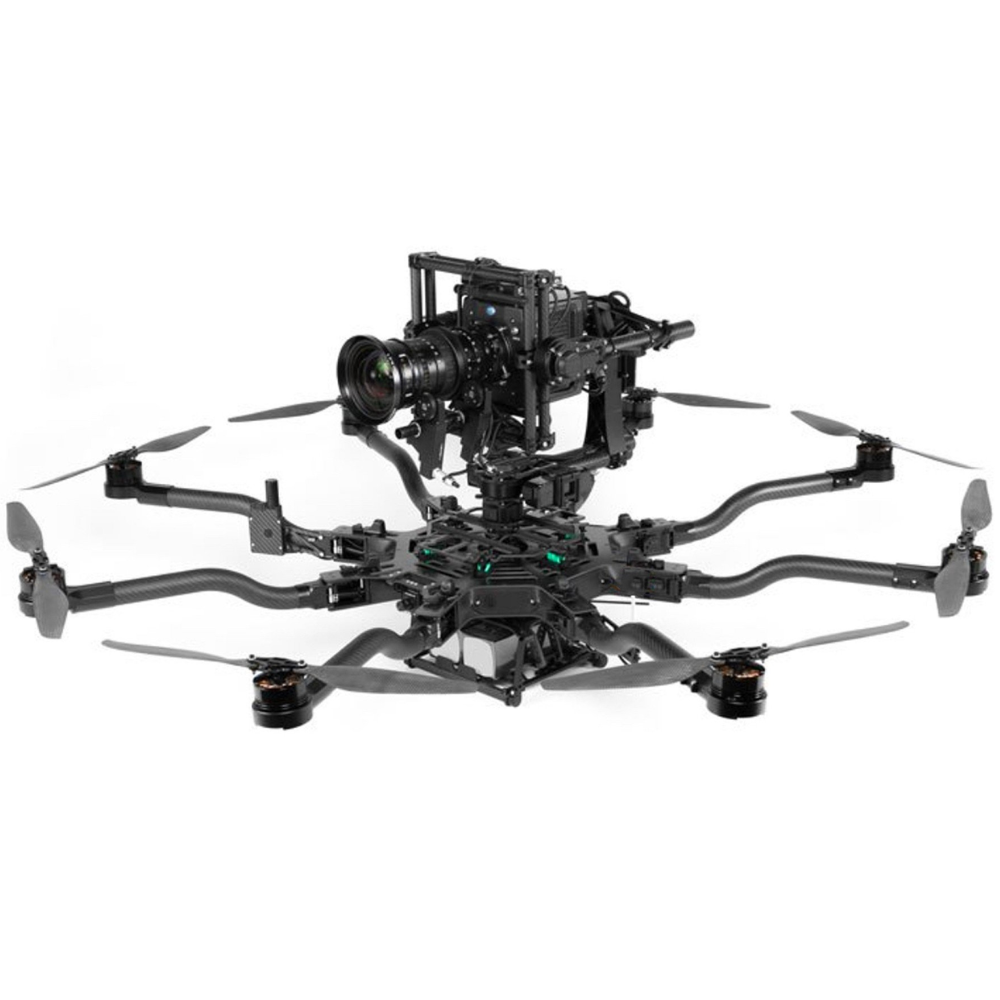
This effect is meaningful on every aircraft, but it is most consequential on a heavy-lift cinema platform. Our Freefly Alta 8 carrying an ARRI Alexa Mini, vintage glass, the gimbal, and the wireless camera control system is already a heavy payload at sea level. At Grand Canyon elevation, that same configuration is asking the aircraft to work noticeably harder for the same flight envelope.
When cold and altitude show up together
A high-altitude location in winter, or a high-altitude location at any time of year where temperatures drop overnight and into the morning shoot window, stacks both effects. The thinner air shortens the flight envelope. The cold reduces the energy the battery can deliver into that already shortened envelope. What looked like a comfortable eight-minute flight on a producer’s spreadsheet can land closer to five minutes in real conditions, and the operator has to know that going in.
This is the situation we planned around when the YSL Libre shoot took us to the Grand Canyon. We did not show up with a sea-level California flight plan and hope the aircraft performed. We planned a different aircraft configuration for that location specifically.
How we plan around it before the shoot
The planning starts at the desk, not at the location. Every aircraft we fly has a published performance envelope: payload capacity, flight time at standard atmospheric conditions, and degradation curves for elevation and temperature. Before a high-altitude or cold-weather shoot, we check those tables against the actual conditions we are going to encounter and confirm that the configuration we planned to fly still has margin to spare.
If the margin is not there, the configuration changes before the shoot day. Specifically:
- Weight comes off the aircraft. We swap to lighter batteries where the lower-capacity pack still hits the flight time we need. We strip non-essential accessories. We pick the lens for the shot rather than carrying the whole prime kit on the aircraft when we know the elevation is going to be tight.
- More batteries come on the truck. Cold and altitude both shorten flight time per pack, so the number of packs needed to cover the shot list goes up. We bring more.
- Battery thermal management gets built into the day. Packs are stored warm and brought to the aircraft just before flight. Charged packs are not left to cold-soak in a case at temperature. After flight, packs are returned to thermal storage rather than charged hot or cold.
- Flight windows get planned shorter. A pack that nominally has 12 minutes of flight gets planned for the conservative number that the temperature and altitude curves predict, with margin held back for landing approach.
- A second aircraft comes if the shot list demands continuous coverage. When the per-flight window drops, the time on the ground swapping batteries adds up. A second known-working aircraft on the rack, ready to swap in, keeps the shot list moving.
None of this is improvisation. All of it gets planned before we leave Los Angeles, against the published numbers for the aircraft and the actual forecasted conditions at the location.
What it means for your call sheet
A cold-weather or high-altitude location does not mean your aerial coverage gets compromised. It means the aerial unit needs to plan for the conditions, and the call sheet needs to reflect the reality of the per-flight window.
Specifically: build in slightly longer ground time between flights, expect more battery rotations than a sea-level summer day would require, and confirm with the aerial unit that they have run the performance numbers for your specific location and conditions before the shoot.
If you are scoping a shoot in the Sierras, the desert at altitude, mountain country, or any winter location where temperatures will be in the cold-weather operating range of a LiPo pack, the conversation with the aerial unit needs to happen at the bidding stage, not on the day. We run those numbers in pre-production every time, and we tell you what the configuration costs in flight time before you build the schedule around an assumption that will not hold.
If you are scoping a shoot in conditions like these, book a consultation or request a quote. We will walk through the location, the conditions, and what the aircraft can actually deliver, before the call sheet gets locked.
Shooting at altitude or in cold weather?
We run the performance numbers against your specific location and conditions before we bid the job. Heavy-lift cinema platforms, planned weight budgets, thermal-managed batteries, and a known-working backup aircraft on the truck.
Or fill out the contact form. We respond the same day.