August 27, 2026 ·4 min read
By Jaron Denson, owner and aerial director of photography at Drone Tech Aerial. FAA Part 107 remote pilot, flying productions in Los Angeles since 2012.
Filming Off-Road Racing with Drones: What the Baja 1000, King of the Hammers, and Formula Drift Taught Us
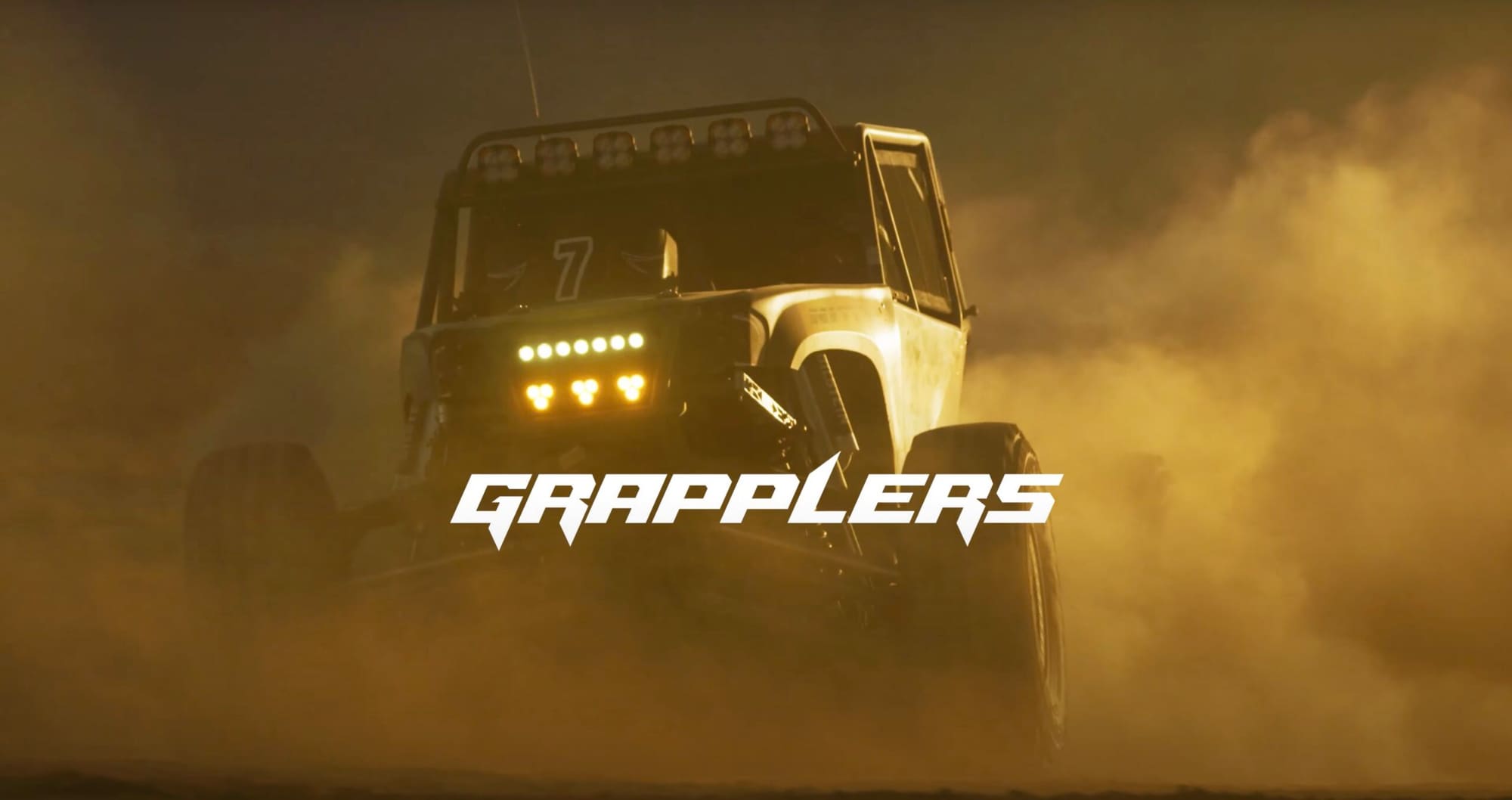
Motorsports is the discipline that taught us the most about drone cinematography, because it forgives the least. A trophy truck does not do a second take. A drift car does not hold for reset. The event happens once, at speed, in an airspace already crowded with helicopters, and the broadcast either has the shot or it does not.
Our racing resume runs through the SCORE International series, where we became the first drone company to film the Baja series for CBS Sports broadcast, working with Brentwood Communications International (BCII TV). It includes the SCORE San Felipe 250 and the 50th Anniversary Baja 1000, King of the Hammers for NBC Sports Network, Formula Drift for CBS Sports, and the feature documentary Dust 2 Glory. This post is what that work taught us about doing motorsports aerial coverage properly, for producers and event organizers considering drone coverage of a race program.
The airspace is the first problem, not the shot
Desert racing runs under a working ceiling of manned aircraft. At the 2016 Baja 1000 we flew alongside more than 37 manned helicopters over the course of the event without incident, and at San Felipe we were on the radios continuously, deconflicting with the 11 helicopter pilots covering the race. That coordination is the actual qualification for this work. Race organizations allowed our drones into that environment because our background in manned aviation meant the helicopter pilots trusted the drone operation not to create a safety problem.
The practical structure looks like this: agreed altitude blocks between drone and helicopter operations, continuous radio contact on air-to-air frequencies, and hard geographic handoffs so a helicopter dropping into a section knows the drone is already clear. Manned and unmanned aircraft sharing a race course works, and the broadcast benefits from both: helicopters hold long linear chases across open desert, drones get low and tight where the terrain and the action concentrate.
Multiple drones over one course
Big events want more than one drone in the air. At Baja 1000 qualifying we flew as one of three drone teams plus an FPV aircraft, all working the same short course. The coordination method that kept six hours of continuous flying incident-free was altitude separation between aircraft: one aircraft high on wide venue coverage around 150 feet, one at mid-level on a standard rear chase around 50 feet, and ours working low, usually 5 to 30 feet off the ground and the trucks.
That low block is where the shots live. Speed on camera comes from proximity: ground rush, berm-level framing, a truck filling frame with its suspension loaded. Coverage flown at 100 feet flattens the action into a map. The reason we can hold the low block safely is crew structure.
Two operators, always
For motorsports we fly dual operator: a pilot in command flying the aircraft and a dedicated drone camera operator framing the shot. The division of labor is what makes low, fast tracking shots repeatable instead of lucky. The pilot flies the line and manages separation from terrain, vehicles, and other aircraft. The operator holds the frame through the whipping and yawing that chasing a race vehicle involves. One person doing both jobs at 5 to 30 feet over a live course is a risk profile we do not accept.
The prep matters as much as the crew split. Before the race we walk the proposed filming positions, then rehearse: practice runs on the flight lines with camera rehearsal, so pilot and operator have flown the route and know the framing before a race vehicle ever enters it. Lens selection is part of that rehearsal. Focal length trades reach against intimacy, and picking it deliberately per position is a meaningful part of why two positions a hundred yards apart can cut together like different scenes.
Spectators are a hard line
Race crowds gather exactly where the action is, which is exactly where the camera wants to be. Our flight lines are built so the aircraft works over the course and never over spectators. Part 107 draws real boundaries around flight over people, and an event environment is the wrong place to test them. We cover the rules and categories in detail elsewhere; for planning purposes, the version that matters is simple: the shot list gets designed around crowd positions from the start, not adjusted on race day.
What this looks like for your event or production
The platform has evolved since our Inspire 2 years on the SCORE series. Today the DJI Inspire 3 with Zenmuse X9 carries a full-frame 8K cinema camera at the speeds this work needs, with an HD downlink for live broadcast monitoring. The methodology has not changed: manned-aircraft coordination, altitude-separated multi-drone plans, dual-operator crews, rehearsed lines, and low proximity coverage flown with margin.
If you are producing race coverage, an automotive program, or a branded shoot built around motorsports, our motorsports and racing drone coverage page covers the service side, and the event posts linked above show the work. Request a quote with your event dates and we will walk the course map, the airspace, and the coverage plan with you.